Building a design team from one, across nine pods
I joined Brightwheel as its only designer. In two and a half years I grew a team of four, won the case for a design system and handed its build to the right person, and wrote down how we work so nine pods didn’t need me in every review. I designed full time throughout.
- Role
- Lead Product Designer and design manager, then interim Head of Design. A full-time IC the whole time
- Team
- Up to four designers at once, plus contractors; the Head of Product, the CEO, and the PMs and engineers in nine pods
- Timeline
- 2021 to 2023, about two and a half years
- Result
- 1 → 4 designers, a funded design system, and one way of working across nine pods
The problem
Brightwheel had no design team. Nine pods were shipping, and years of contractors had left competing patterns and no shared way of working.
The insight
One reviewer can’t hold nine pods together. Designers needed written standards and a system to build with, so they could make good calls without waiting for me.
What I did
Built the team, won approval for a design system and delegated its build, wrote down how we decide, and gave designers bigger work as they grew.
The result
A funded design system with its own pod, one way of working across nine pods, and a designer who joined early in her career and now works in design leadership.
One designer, nine pods.
Brightwheel runs admin, classroom and family tools for early education. Its Head of Product recruited me as the only designer, with a brief to grow the team and lead it.
Product work ran in nine pods, each with a PM, engineers and its own deadlines. So the job was two jobs: design in the pods that had no designer, and build the team and standards that would let more designers work as one.
“When Mike came onboard, the design team was non-existent. Within weeks, he took the reins and really helped transform the design team's presence at brightwheel.”

The design system nobody wanted to start again.
Brightwheel had started several design systems and finished none, which is how the competing patterns got there.
Engineering expected another project that would start and stop, and the CEO was opposed. So I argued cost instead of looks: the design time lost choosing between patterns, a component library growing out of control, and the engineering hours going into one-offs. I gathered numbers on each.
It was approved, with its own pod and a steering group. Then I delegated much of the work to Alyson Jones, a designer on my team. I stayed involved in the design direction and concept, and oversaw the work as it took shape.
Anyone could propose a change. The path had 11 steps and started with one question: a one-off snowflake, or part of the system?
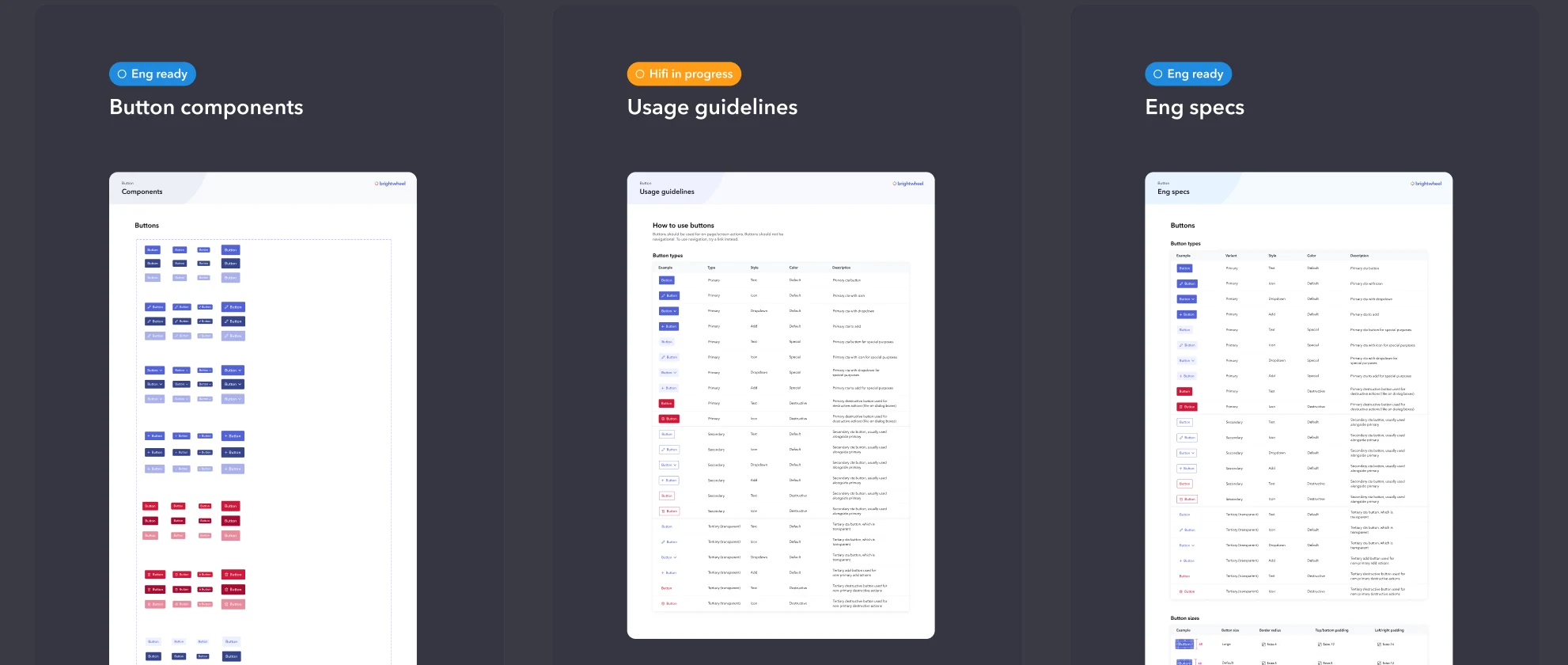
Snackpack’s Button page. Every component got three pages: the components, how to use them, and engineering specs, each with its own status.
Decisions that didn’t need me in the room.
With designers spread across pods, I couldn’t review everything. So the bar went in writing: a review path that named its stage, and five principles for how we work.
Vision, goals, context, core concepts
Flows, storyboards, layout
Visual details, states, copy
Specs to engineering, then design QA
Every review said which stage the work was at. A 10% concept didn’t collect pixel notes, and a 99% file didn’t reopen the strategy.
01Deliver value quickly
Adapt the process to the project and keep it simple.
In practiceOn student portfolios, I agreed with engineering which existing components we could reuse before designing anything new, which kept the scope small.
02Collaborate early and often
Don’t fly solo. Bring in product, engineering and users.
In practiceBig bets started with a sketching jam with the CEO and product leads, and hard problems got pair design sessions with PMs and engineers.
03Guess less, innovate more
Get insight fast, and weigh what users say against what they do.
In practiceCustomers who asked to be closely involved joined a Slack group our designers could reach directly. Early-education experts inside the company reviewed work too.
04Disagree often, defend your decisions
Push back with the problem, the people and the reasoning.
In practiceWhen a proposed incident-reports feature wouldn’t let teachers edit or sign forms, I argued for a small stopgap now and the full build when we could do it properly.
05Make and break rules
Respect the design system, and propose changes when there’s a better way.
In practiceAny designer could challenge a Snackpack component or propose a new one, through the same path as everyone else.
The rhythm underneath: design huddles, an async stand-up in Slack, reviews and crits, 1:1s, a company-wide design feedback channel, and designathons for problems no single pod owned.
From junior designer to design leader.
The clearest sign a team is working is what its people go on to do.

Laura was one of five designers I hired, and she joined early in her career. At first she was reserved in huddles, jams and crits. I gave her steady encouragement, mentorship and 1:1s, feedback from the whole team, and projects of her own to build her confidence.
She became our most vocal designer, giving great feedback and staying open to new ideas and iterating on them. She grew into one of the team’s top designers and a Senior Product Designer, and has since moved into design leadership at Gusto.
The screens here are hers: browsing learning activities and adding them to a lesson plan, released on mobile for admins and teachers.
Of the five, two stayed nearly two years and three joined for shorter stints.
“The design team's resources and practices grew and improved thanks to his suggestions and leadership.”
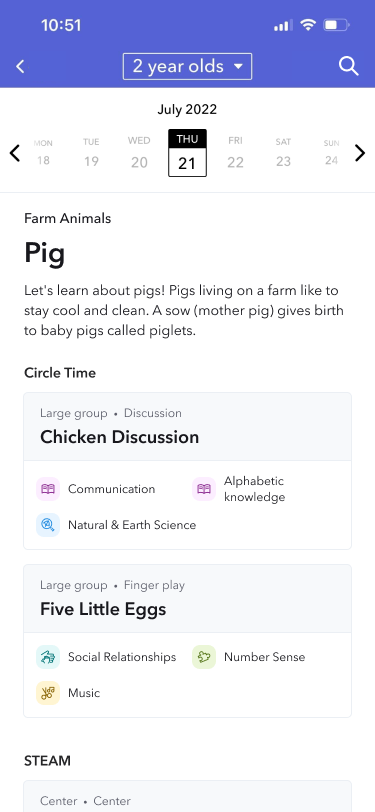
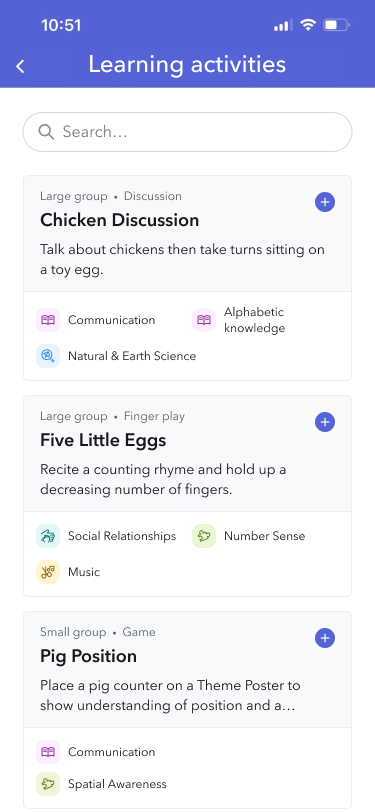
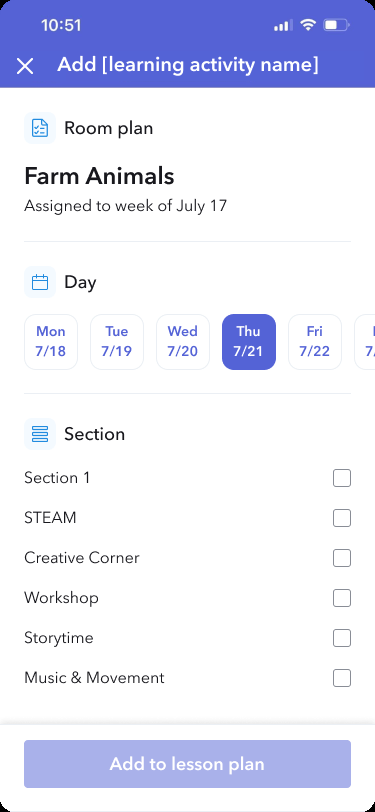
Design by Laura Wyatt, shown from her spec file.
“He has good intuition, a positive disposition, and is quick to support his teammates to level up their designs as well.”
“He was always willing to jam and collaborate together to create the best experience for our users, and really up-leveled the team.”
“Mike is flexible and collaborative when we’ve needed to come up with alternate designs to cut scope, and he knows when to stand his ground and gently push against product/eng in order to deliver the right user experience.”
Write the standard down
If the bar lives in my head, I’m the only reviewer. Written principles and a named review stage let designers decide without me.
Win it, then hand it over
The case for Snackpack was mine to make. The build was better off with a designer who could give it her full attention.
Grow people with real work
Encouragement and 1:1s matter. Confidence comes from owning projects that ship.
Make the capacity case early
Design hiring never caught up with nine pods while I designed full time. I’d bring that gap to leadership sooner, as a choice between funded options.